A closer look at our ingredients
INGREDIENT RESEARCH
Explore the ingredients behind Brocolyte: broccoli sprouts, beetroot, turmeric, and ginger.
Explore published research on individual ingredients and their compounds, with links to the original studies.
Naturally occurring dietary nitrate.
BEETROOT & DIETARY NITRATE
Beetroot naturally contains dietary nitrate. Your body can convert nitrate into nitrite and then nitric oxide—a process known as the nitrate–nitrite–nitric oxide pathway.
This pathway is studied in exercise research. Some small, controlled studies of nitrate-rich beetroot juice have reported that participants used less oxygen at the same cycling workload and could continue cycling for longer in exercise tests.
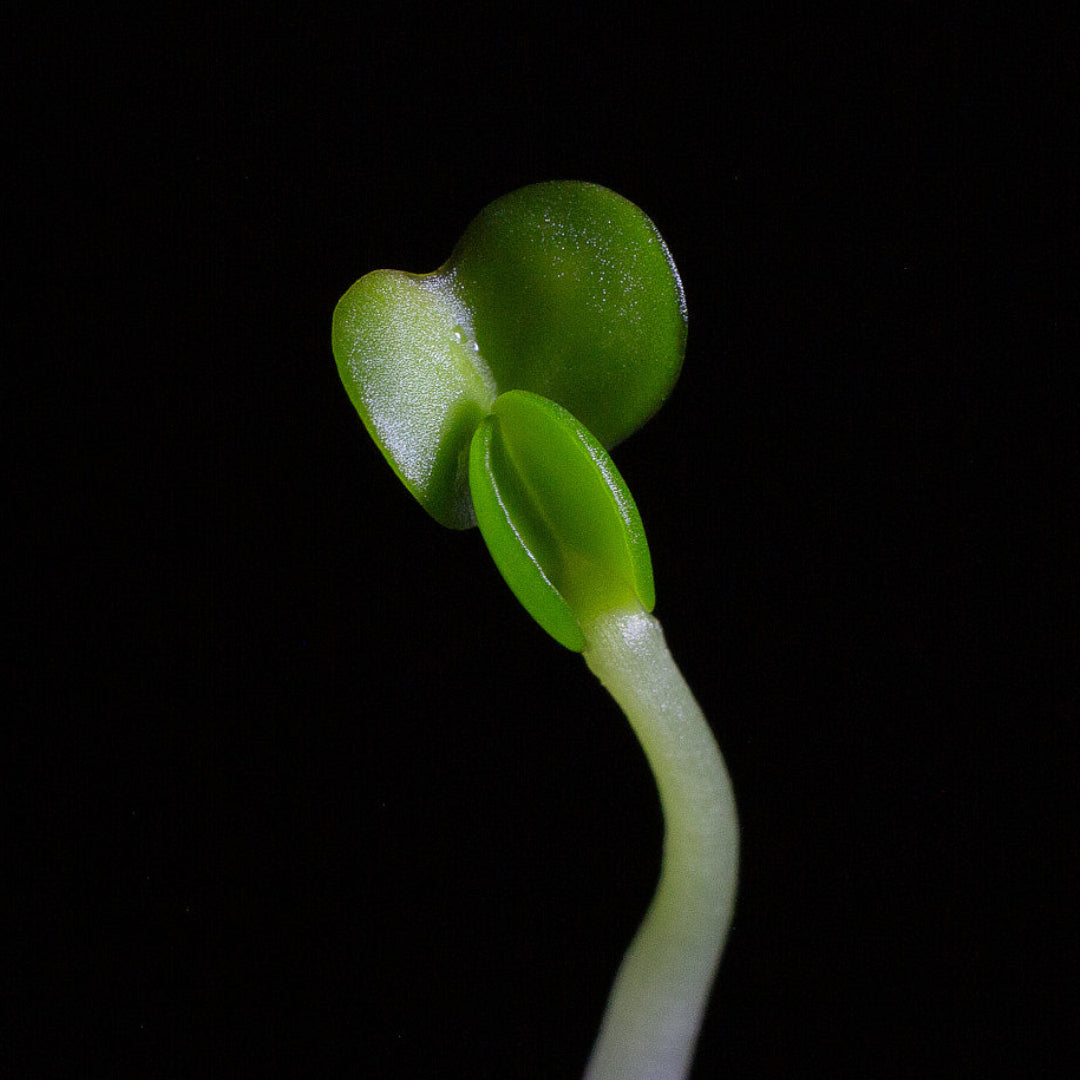
Sulforaphane and isothiocyanates.
BROCCOLI SPROUTS & NRF2
Broccoli sprouts contain glucoraphanin, a naturally occurring compound that can be converted into sulforaphane. Sulforaphane belongs to a group of compounds called isothiocyanates, or ITCs.
Researchers study sulforaphane’s interaction with Nrf2, a protein that helps regulate cells’ responses to oxidative stress. Laboratory studies have observed activation of this pathway after cells were exposed to sulforaphane, affecting genes involved in antioxidant responses.
Curcumin and cellular signalling.
TURMERIC & NF-κB
Turmeric contains curcumin, one of its naturally occurring plant compounds. Researchers have investigated how curcumin interacts with NF-κB—a protein complex that helps regulate genes involved in immune responses and inflammation.
In laboratory experiments using cultured cells, curcumin has reduced activation of this pathway under specific experimental conditions. These studies explore how plant compounds influence the signals that control inflammatory responses.
Gingerols, shogaols and cellular signalling.
GINGER, COX-2 & TRPV1
Ginger contains gingerols and shogaols, compounds studied for their interactions with cellular signalling.
COX-2 is an enzyme involved in producing prostaglandins—chemical messengers that take part in inflammation. Some cell studies have reported reduced COX-2 expression after exposure to gingerol.
Separate laboratory experiments have shown how ginger compounds activate TRPV1, a receptor involved in sensing heat and pungent compounds.

NITRATE IMPACT ON ACUTE TRAINING TESTS
In a randomized, double-blind study, a single dose of beetroot nitrate taken before exercise lowered the oxygen cost of submaximal cycling and extended time to exhaustion.
NITRATE PROTECTS MUSCLE DURING DISUSE
In a controlled study, dietary nitrate preserved mitochondrial function and muscle protein synthesis rates during short-term immobilisation, guarding against disuse-related muscle decline.
SULFORAPHANE AND ENDURANCE CAPACITY
Researchers at the University of Tsukuba found that sulforaphane, an isothiocyanate from broccoli, activated the Nrf2 antioxidant pathway and increased endurance running distance, while lowering markers of oxidative stress and muscle damage after exhausting exercise.
SULFORAPHANE PROTECTS MUSCLE FROM EXHAUSTIVE EXERCISE
In a study at the University of Bologna, sulforaphane pre-treatment protected skeletal muscle against damage caused by exhaustive exercise and strengthened the body's own phase-II antioxidant defenses.
GINGER REDUCES EXERCISE MUSCLE PAIN
Across two randomised, double-blind, placebo-controlled studies, daily ginger reduced muscle pain by around 25% the day after intense eccentric exercise.
GINGER AND TRAINING PERFORMANCE
In a randomised, double-blind, placebo-controlled trial, ginger supplementation improved workout performance while lowering perceived exertion and neuromuscular fatigue in trained athletes.
TURMERIC AND MUSCLE RECOVERY
In a double-blind, placebo-controlled study, curcumin (the active compound in turmeric) reduced delayed-onset muscle soreness and lowered markers of muscle damage in the days following intense exercise.
TURMERIC AFTER ENDURANCE RUNNING
In a randomised, placebo-controlled trial, a curcumin formulation reduced muscle soreness and the extent of muscle injury after a demanding bout of downhill running.